A college-basketball game can be listed at a neutral venue without the surrounding experience being identical for both teams. The designation tells you where the game is classified; it does not tell you how many supporters attended, how each team arrived or how much recovery time preceded tipoff.
For early-season tournament research, replace the shortcut “neutral means equal” with a small set of verifiable questions.
Separate the label from the actual location
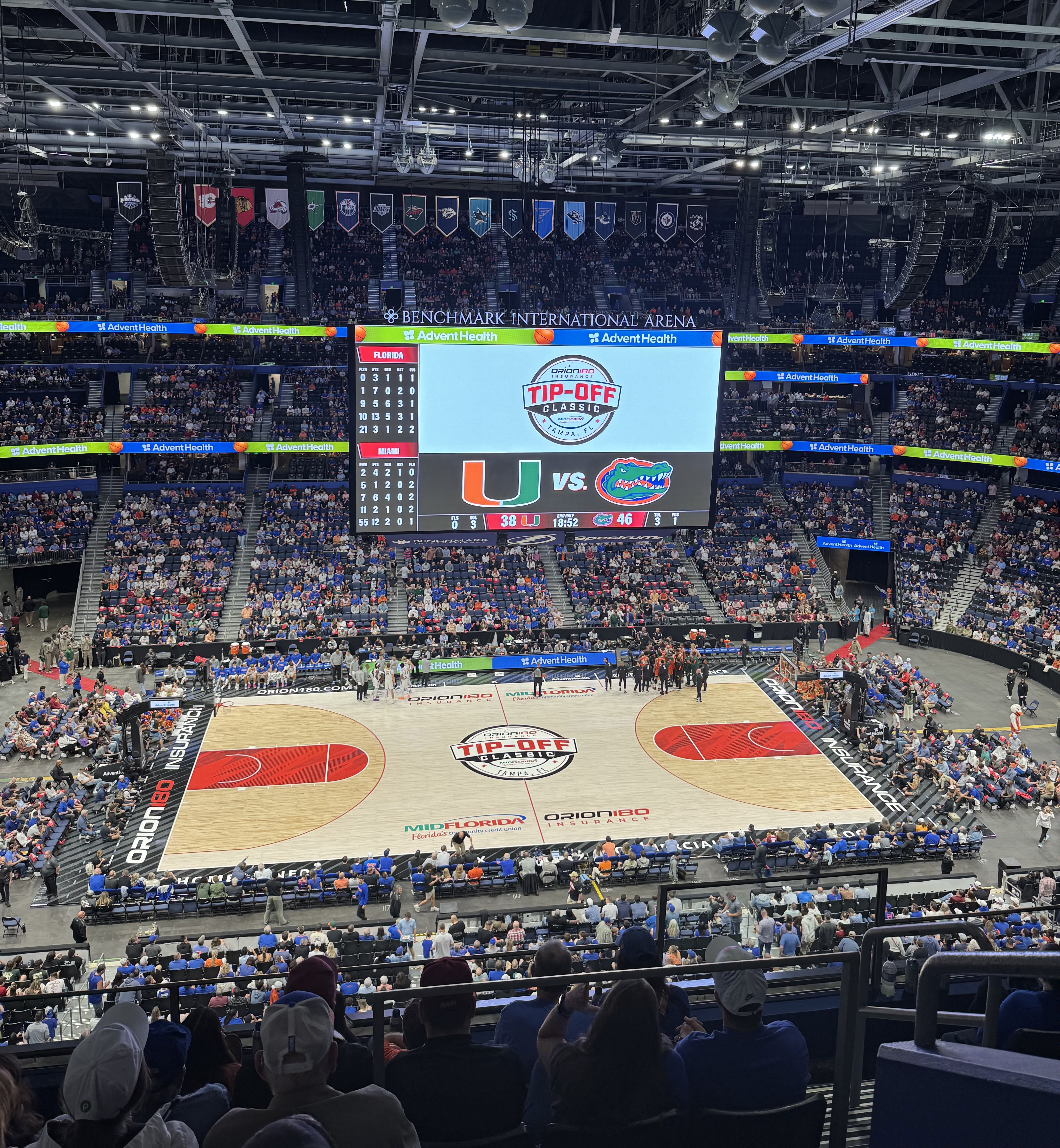
First record the arena, city and scheduled start. Keep a designated home team distinct from a game played on that team’s normal home floor. A bracket or scoreboard can need a home-side listing even when the event is away from both campuses.
Do not convert the venue label into an automatic numerical adjustment. Any claimed advantage needs evidence and a consistent method, not a guess based on the team displayed first.
Check the crowd without inventing a count
Proximity can make a crowd question worth investigating. It does not establish the answer. A school may have many supporters at a distant event, while a nearby program may not fill a large building.
Use a documented attendance figure for total attendance and a reliable report for the character of the crowd. Neither automatically supplies an exact split by team. If the distribution is unknown, preserve that uncertainty rather than attaching a fabricated percentage to it.
Write down the preparation sequence
Record the previous game’s end, the next scheduled tip and any verified travel disruption. Keep facts separate from explanations: a short turnaround is a calendar fact; saying it caused poor shooting requires additional evidence.
During a multi-day event, the nominal number of rest days can conceal different hours between games. Overtime, a late finish and actual player minutes also belong in the review. Do not substitute a generic tournament-fatigue story for the available participation record.
Observe the playing environment
A different shooting background, floor layout or arena configuration is something to check, not a ready-made reason to predict misses. If you discuss an adjustment, identify the observation or attributed player comment behind it.
A rough opening stretch alone does not prove that the building caused it. Shot selection, defensive pressure, personnel and ordinary variation remain possible explanations.
Keep results tied to the event
When comparing an early neutral-site performance with a home game, retain the opponent, available lineup and possession context. A large winning margin against one opponent is not a venue test conducted under otherwise identical conditions.
The same caution applies to betting records. Do not merge every neutral-site result into a universal trend without preserving the actual games and source prices. A label can organize a sample without explaining why the results occurred.
A practical venue log
- Official location, local start and designated home side.
- Verified attendance and any reliable crowd description.
- Previous finish, travel facts and hours to the next game.
- Actual minutes and overtime, not assumed workload.
- Observed playing conditions and clearly attributed comments.
- Opponent and lineup context beside the result.
ISR analysis: Neutral-site classification is a useful starting field in a research log. It is not a complete description of the conditions. This checklist is an educational method, not a prediction or betting recommendation.